Food Guides
Konbini Fried Chicken, Ranked: FamiChiki vs. Karaage Kun vs. Nanachiki
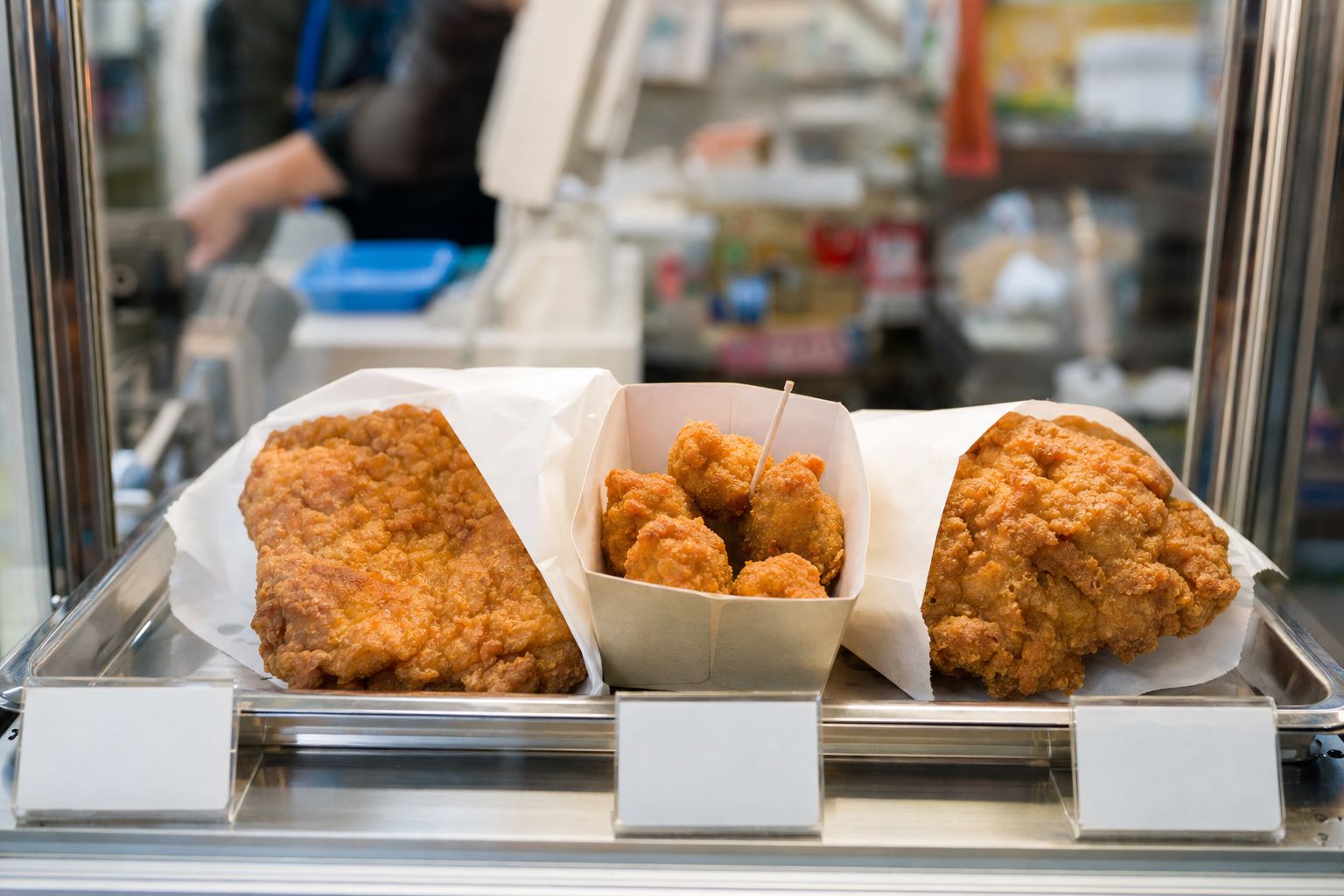
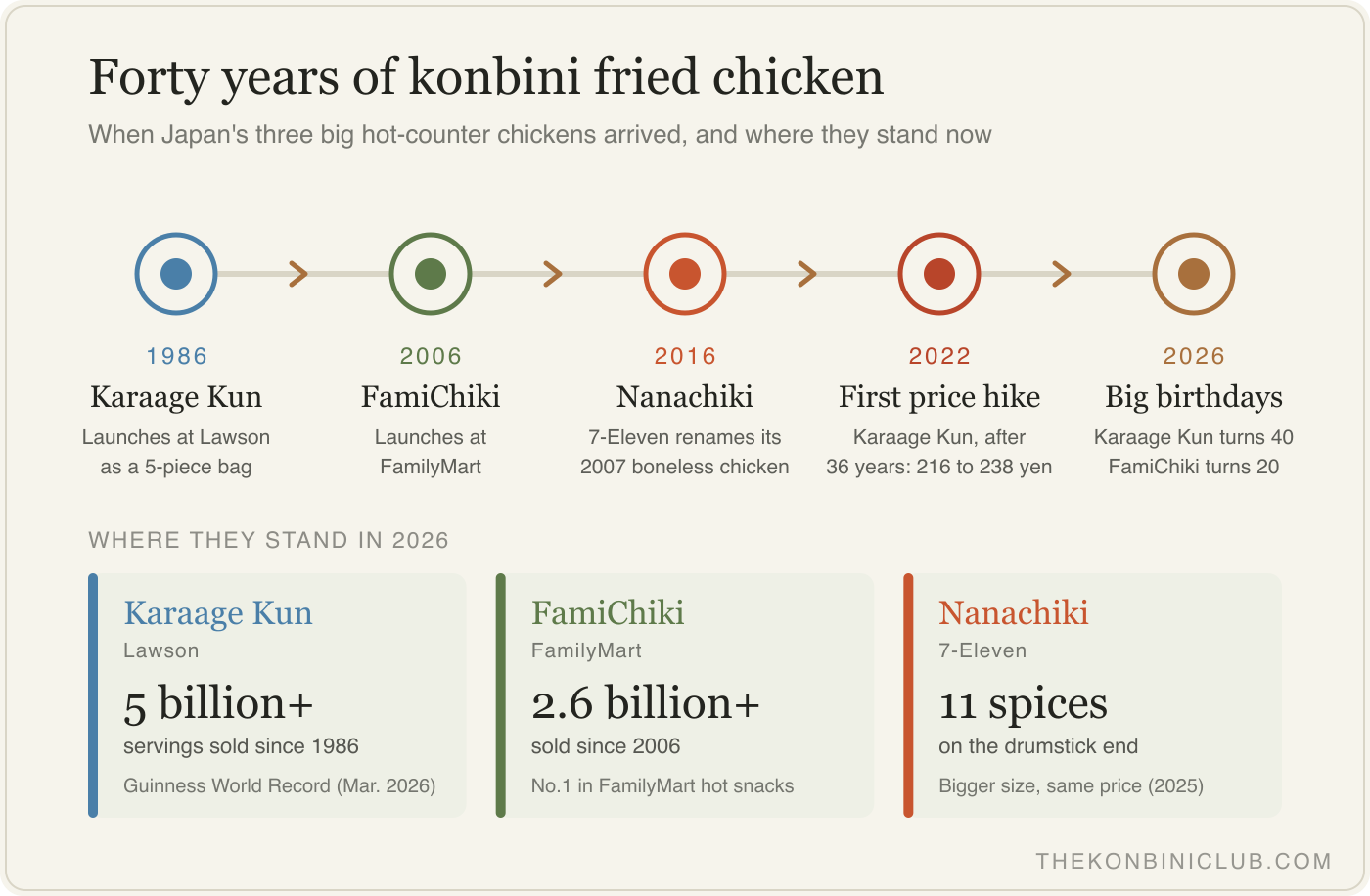
This year, one of the most eaten pieces of chicken in Japan quietly turns 20 without ever having changed its name. FamilyMart’s FamiChiki launched in October 2006, and by this past May it had sold more than 2.6 billion pieces — enough to make it the best-selling item in FamilyMart’s entire hot-snack case. Lawson’s Karaage Kun is even older: it turned 40 in April, has moved over 5 billion bags since 1986, and was certified by Guinness World Records this March as the best-selling freshly fried karaage brand in the world.
I did not expect to be writing about world records in a snack blog either.
The short answer: if you want a single hand-held piece to eat while walking, FamiChiki is the safest default and the one most stores keep genuinely fresh. If you want the bag-of-bites version to share or graze on, Karaage Kun is the original and still the best of that shape. 7-Eleven’s Nanachiki is good — sometimes better than both — but it’s the one most likely to be sitting under the heat lamp a little too long. Details, prices, and the one trick that actually saves you money, below.
These aren’t three versions of the same thing
The first thing that trips people up: FamiChiki and Nanachiki are the same shape — one large, boneless piece of dark meat, breaded and fried whole, meant to be eaten out of the bag with one hand. Karaage Kun is not that at all. It’s a bag of five bite-sized nuggets, closer to American popcorn chicken than to a chicken cutlet. Comparing “which one is bigger” between Karaage Kun and the other two is comparing the wrong unit — a single Karaage Kun piece is maybe a third the size of a FamiChiki.
| Item | Chain | Format | Price (tax incl.) | Since |
|---|---|---|---|---|
| FamiChiki | FamilyMart | 1 large boneless piece | ¥248 | Oct. 2006 |
| Karaage Kun (Regular) | Lawson | 5 bite-sized pieces | ¥248 | Apr. 1986 |
| Nanachiki | 7-Eleven | 1 large boneless piece | around ¥250 | 2016 (as a name) |
FamiChiki — the one that’s basically a mascot at this point
FamiChiki is boneless thigh meat, and FamilyMart has resisted turning it into a rotating novelty product the way the other chains do with their fried chicken. That steadiness is exactly why it’s the default answer: you know precisely what you’re getting no matter which FamilyMart you’re standing in, from a station kiosk to a rural roadside location. The price moved from ¥240 to ¥248 in March 2026, part of a broader round of hot-snack price increases across the industry.
The drawback, if I’m being honest, is that FamiChiki’s fame means it moves fast — batches get refried often — but on a slow afternoon at a quiet location, you can occasionally get one that’s been sitting a while and gone slightly leathery at the edges. That’s not unique to FamiChiki, but it’s the one I’ve had that experience with most, purely because it’s the one I buy most.
Karaage Kun — the original, and the record holder
Karaage Kun predates the other two by twenty years and effectively invented the category of “convenience store fried chicken you buy without thinking about it.” Lawson didn’t raise its price at all for 36 straight years — the first-ever price change came on May 31, 2022, from ¥216 to ¥238 — which tells you something about how much margin chains were willing to eat rather than touch a product this iconic. It’s around ¥248 now, roughly the same as FamiChiki, though the shape and portion are completely different, as above.
The flavor lineup is where Lawson actually competes: Regular, Red (spicy), and rotating seasonal flavors that show up and disappear within weeks — lemon, cheese, a “mix” bag with five different seasonings in one pack. My honest opinion, and I’ll take the disagreement: skip whatever the seasonal flavor-of-the-month is unless you’re specifically curious. Regular and Red cover the range perfectly well, and the limited flavors exist mostly to get a news cycle, not because Lawson found something better.
Nanachiki — the one 7-Eleven undersells
Nanachiki is the youngest name of the three: 7-Eleven sold a plain “boneless fried chicken” from 2007 and only rebranded it as Nanachiki in 2016. It’s made from the lower thigh (the drumstick end), seasoned with a blend of eleven spices. Taste-wise, it’s genuinely competitive — a little heavier on pepper than FamiChiki, less sweet than Karaage Kun’s coating. 7-Eleven even ran a “bigger Nanachiki, same price” size-up campaign in the summer of 2025, which is the kind of move a chain only makes when a product is already selling well and they want to defend the position rather than raise the price outright.
Where it falls down for me isn’t the chicken itself, it’s turnover. 7-Eleven’s fried-food case, in my experience, gets restocked less predictably than FamilyMart’s or Lawson’s at the locations near my office — some hours it’s clearly fresh out of the fryer, other hours it’s been sitting long enough that the coating’s gone a little soft instead of staying crisp, the sakusaku crunch (the onomatopoeia Japanese uses for that dry, crackling bite) noticeably absent. That’s a location-and-timing problem more than a recipe problem, but it’s the reason Nanachiki is third on this list rather than first, even though on a good batch it might be my favorite of the three.
What I actually buy
Lawson’s sweets section is, in my experience, the best of the three chains by a wide margin — the seasonal matcha desserts especially — and for a while I assumed that reputation would carry over to its fried chicken too. It doesn’t, automatically. Good ice cream case and good fryer case are two different operational things, staffed and restocked on different schedules, and trusting one because of the other is a shortcut that doesn’t always pay off. In practice I default to FamiChiki on a normal day, grab Karaage Kun Red when I want something to snack on over twenty minutes rather than finish in three bites, and only go for Nanachiki when I’ve specifically checked that the case looks freshly turned over.
The one trick worth knowing
7-Eleven periodically runs a fried-food sale: a 16:00–20:00 window where fried items including Nanachiki drop to half price (the most recent one ran for four days in early June 2026, with Nanachiki at ¥125). It isn’t announced far in advance and it isn’t permanent, so I can’t give you a schedule, but if you’re near a 7-Eleven around dinnertime and the fried case has a small colored sign taped to it, it’s worth a look before you pay full price somewhere else. I’ve timed a grocery run around it more than once and felt slightly too pleased with myself about it.
None of these travel — hot, fried, boneless chicken is a same-day, same-store food, full stop, in the same category as the tamago sando sitting two shelves over. If you’re building a care package instead of visiting in person, the shelf-stable side of Japanese snacking is covered in our snack starter list, and if rice is more your target than fried chicken, the onigiri price situation has been moving in the opposite direction lately — down, for once. For the drink to go with any of these, our bottled tea ranking covers what’s actually in the fridge next to the register.
Twenty years, forty years, and a Guinness record between them, and the real answer to “which one” still comes down to which fryer near you turned the case over most recently. That’s not a satisfying ending, but it’s the honest one.
— Sen
The Konbini Hit List (Free)
The 25 snacks Japanese people actually buy — printable, with what to order online when you can't fly to Tokyo.
Get the hit list →