Drink Guides
Konbini Coffee: 4 Easy Order Steps, a Guide from Japan
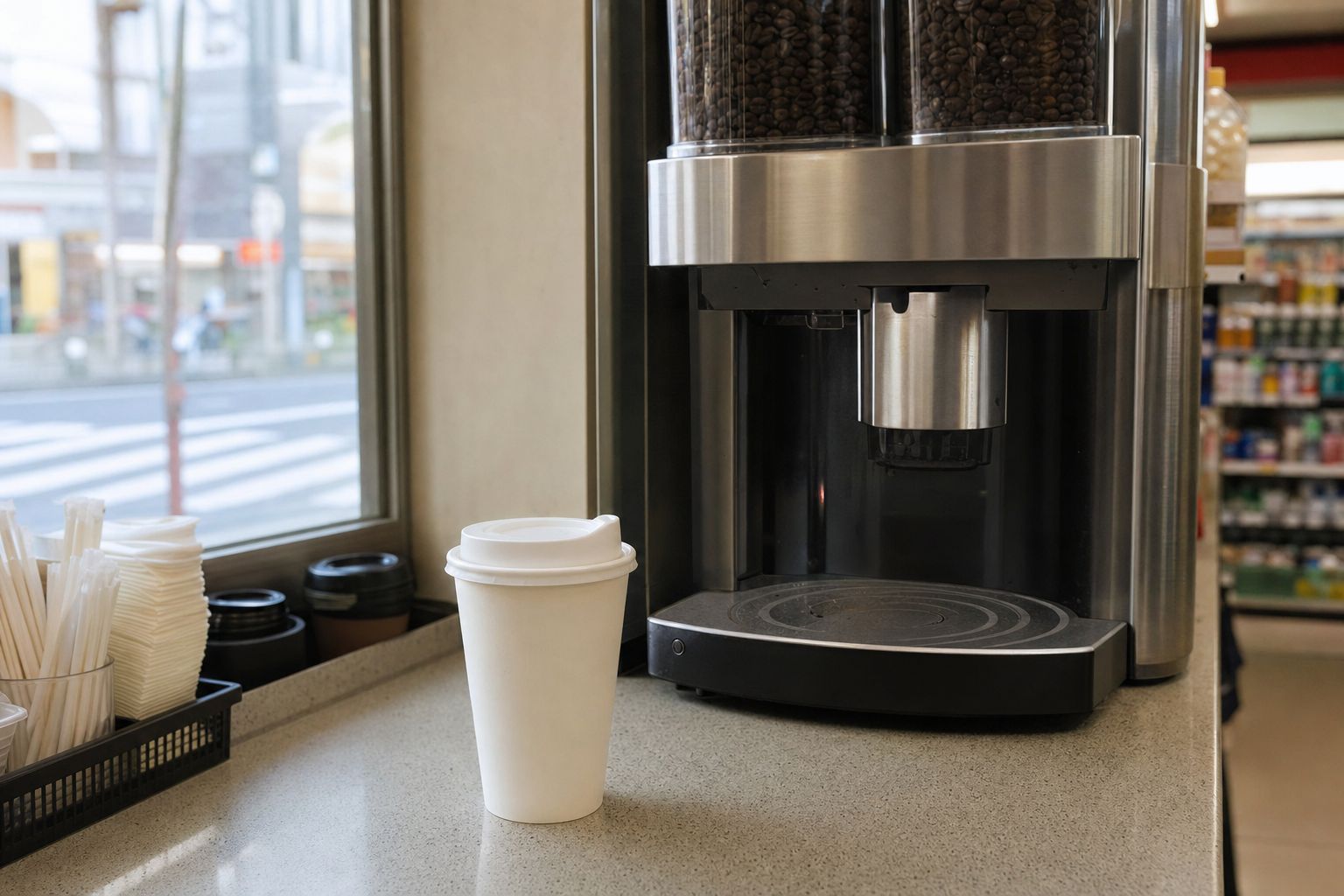
A cup of coffee that costs less than a bag of chips, made from beans ground at the moment you pay for it, sitting on the counter of a store that also sells rice balls and phone chargers. That’s the part visitors never expect: konbini coffee in Japan isn’t the sad, burnt stuff sitting in a glass pot at a gas station back home. It’s a category three national chains have spent over a decade fighting to win, and the coffee got better because none of them were willing to lose.
The short answer: it’s good because it’s brewed to order, one cup at a time, from a machine that grinds whole beans on the spot — not filtered from a pot that’s been sitting since 7 a.m. Ordering takes four steps — and the one difference that trips people up is iced: you usually take an ice-filled cup from the freezer case to the register instead of asking for one. Below: the four steps, the current hot and iced prices at the three chains, and which cup to pick.
Why konbini coffee doesn’t taste like gas station coffee
The mechanism is almost embarrassingly simple. You pay at the register first, get a cup for the size you paid for, and place it under a machine that grinds beans and brews directly into your cup — no carafe, no reheating, no cup sitting under a heat lamp for three hours. Every cup is one serving, made in the twenty seconds it takes the machine to run.
7-Eleven’s Seven Café, FamilyMart’s Famima Café, and Lawson’s Machi Café all launched within about a year of each other back in 2013, and the timing wasn’t a coincidence — once 7-Eleven proved a good cup could sell for less than most people’s train fare, the other two had no choice but to match it or lose foot traffic. That competition never really stopped. FamilyMart pushed out its “most menu items ever” Famima Café relaunch this June, adding an LL size on top of the usual lineup, and I doubt that’s the last move any of the three makes this year.
What it costs right now
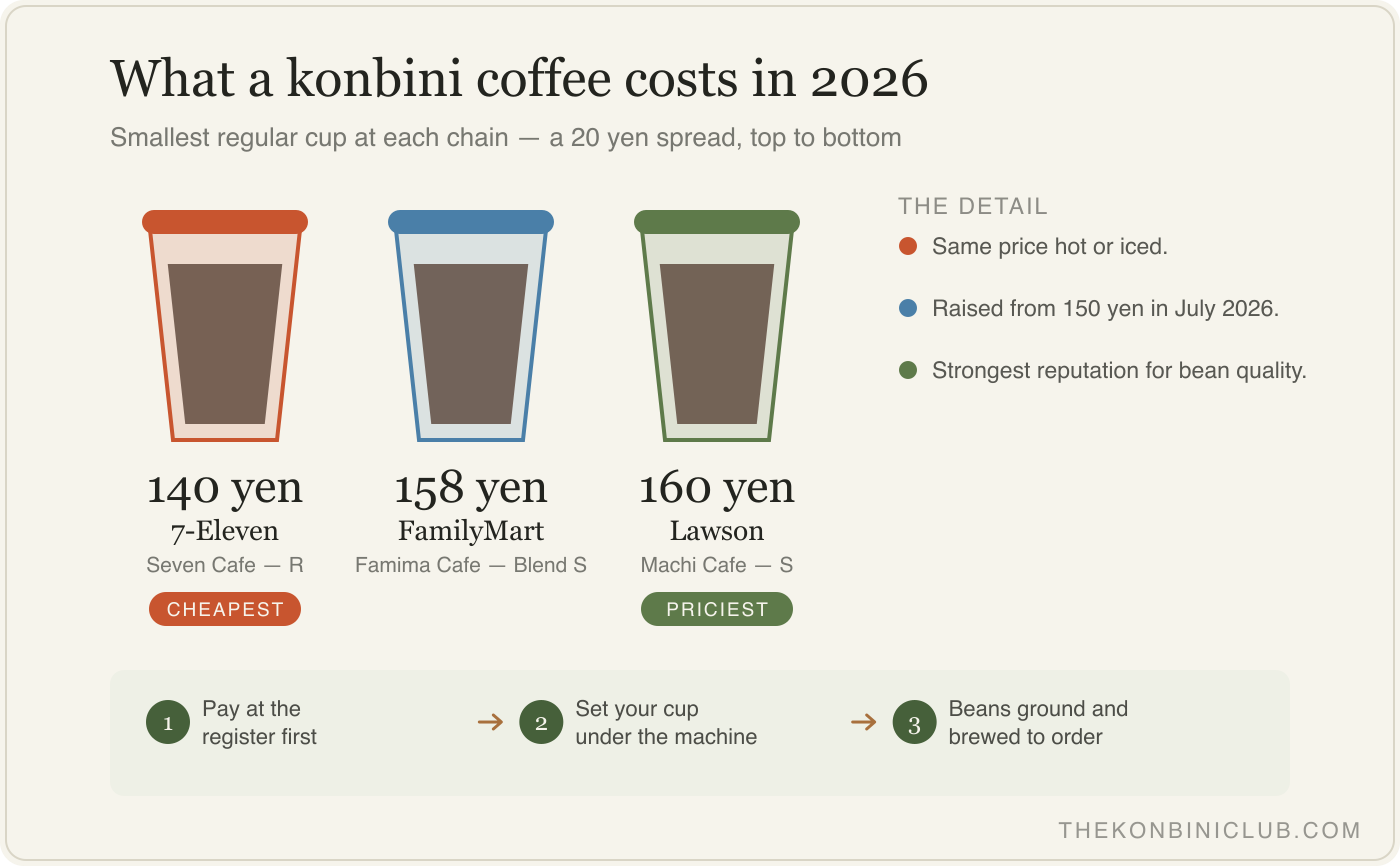
Tax-included prices from each chain’s own pages, checked November 8, 2026. Sizes are named differently at each chain, so compare the cup, not the letter.
| Chain | Hot, small | Hot, larger | Iced, small | Iced, larger |
|---|---|---|---|---|
| 7-Eleven (Seven Café) | R ¥140.40 | L ¥220.32 | R ¥140.40 | L ¥250.56 |
| Lawson (Machi Café) | S ¥160 | M ¥230 | S ¥160 | M ¥260 |
| FamilyMart (Famima Café) | S about ¥150–158 | M ¥220 | S about ¥150–158 | M ¥250 |
7-Eleven lists prices with decimals because of the 8% reduced tax rate; the register rounds the total of your basket. FamilyMart’s June 2026 relaunch announcement lists the Blend S at ¥150, while its product page still shows ¥158, so expect one or the other at the register. Iced is the same price as hot in the smallest size at all three, and costs more in the larger sizes.
None of these are the ¥100 cup this category launched with — Lawson’s original pitch, over a decade ago, was a ¥100 S-size coffee, and that price hasn’t existed anywhere in the chain for years now. Bean costs went up, and konbini coffee went up with them, same as everything else on these shelves (our bottled tea rankings cover the same pattern with green tea).
Which one to pick
Pick by size and temperature first, chain second. The smallest cup at any of the three is a fair test; the price spread between chains is about ¥20. If you want a longer drink, the larger iced cups cost more than the larger hot ones.
The one I’d skip: FamilyMart’s oversized LL cup, unless you drink fast. It’s a lot of coffee, and a big hot cup goes lukewarm before you finish it.
Coffee and green tea aren’t rivals in a Japanese household the way people abroad sometimes assume — plenty of people here run on both, green tea in the morning and coffee as well. Where I draw a line is caffeine after dinner: in the evening it’s barley tea or chamomile instead. I’m not a doctor, and how caffeine affects sleep varies a lot person to person.
There’s also an older layer to this that the fresh-brewed counters never fully replaced: canned and bottled coffee, the Boss and Georgia cans that have been sitting in konbini fridges since long before any machine ground a bean in front of you. It’s sweeter, weaker, and nobody pretends otherwise — but it’s also the coffee you grab when you’re already walking and don’t want to stand at a machine for twenty seconds. Both things exist in the same fridge case, for different moods, and neither one has managed to kill the other off in over a decade of trying.
How to actually order one
The flow differs for hot and iced, and stores vary a little, but this is the common pattern:
- Hot: tell the clerk your size at the register and pay. You get an empty cup for that size. Iced: take an ice-filled cup from the freezer case first, then pay for it at the register. (FamilyMart’s own how-to page describes exactly this split.)
- Take your cup to the machine near the register — don’t grab a random cup from a stack.
- Set the cup on the marked spot and press the button that matches what you paid for: hot or iced, and the size. Pressing hot for an iced cup, or the large button for a small cup, is the classic first-timer mistake. Don’t walk away mid-pour.
- Lid it yourself from the stack next to the machine.
Store differences to expect: at Lawson, some stores have a self-service machine and some prepare the drink for you after you order; in self-service Lawson stores, staff may hand you the iced cup at the register instead of you taking it from the freezer. Newer FamilyMart machines let you pick menu, size and strength on a touch panel. If you’re unsure, hold up the cup and ask “hotto?” or “aisu?” — staff are used to it.
It’s a small ritual, but it’s one every regular here does without thinking, the same unthinking way people reach for the tamago sando two shelves over.
One money-saving detail most visitors never find: FamilyMart sells coffee tickets through its FamiPay app in bundles where you pay for ten cups and get an eleventh free, which is the closest thing any of the three chains offer to a loyalty program. It only pays off if you’re already a regular at that specific chain, but for a daily habit, that’s a real discount on something you were buying anyway — call it Japan’s quietest form of kodawari, the particular, almost stubborn attention to detail that makes people rebuild a ¥100 machine coffee into a category worth defending.
Where this fits if you’re stocking up from abroad
You can’t order a fresh cup of Seven Café through the mail — that part of konbini culture only exists in Japan, which puts it in the same bucket as chilled sandwiches and soft-serve. What you can get shipped is the instant and drip-bag coffee Japanese brands sell for the exact mornings I just described, and if a curated box is more your speed than sourcing it yourself, our honest comparison of Sakuraco, TokyoTreat, and Bokksu is the place to start. For the wider rotation of what’s actually worth grabbing off these shelves, the snack starter list is the companion piece to this one.
None of the three chains make headline-grabbing coffee. What they make is a cup that’s consistently fine, brewed fresh in front of you, for less than the price of a magazine — and after thirteen years of three companies refusing to let each other win, “consistently fine” turned out to be a genuinely hard thing to build.
— Sen
The Konbini Hit List (Free)
The everyday snacks people here actually buy — a printable tick-list with the Japanese name to search for when you order online.
Get the hit list →